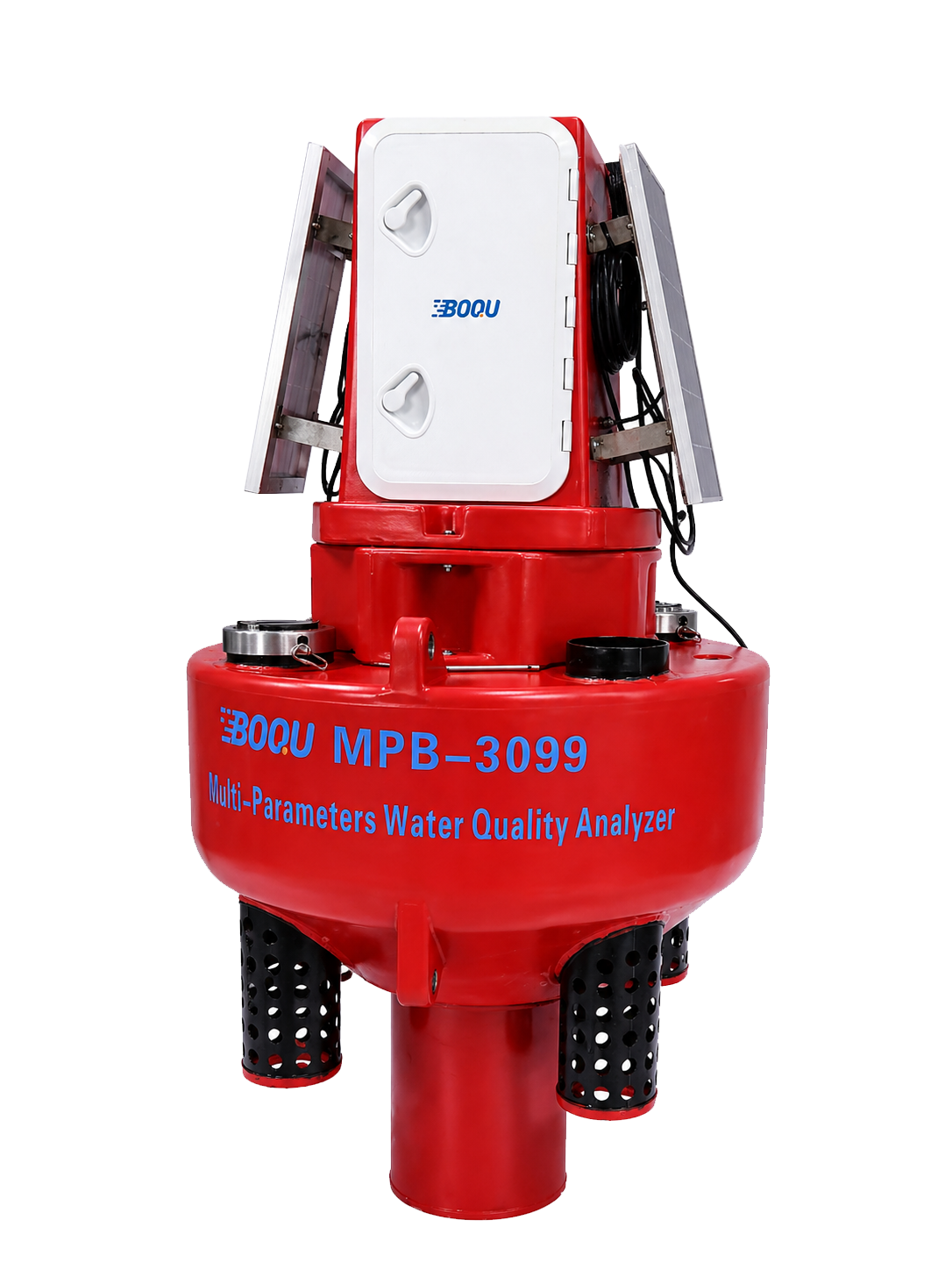
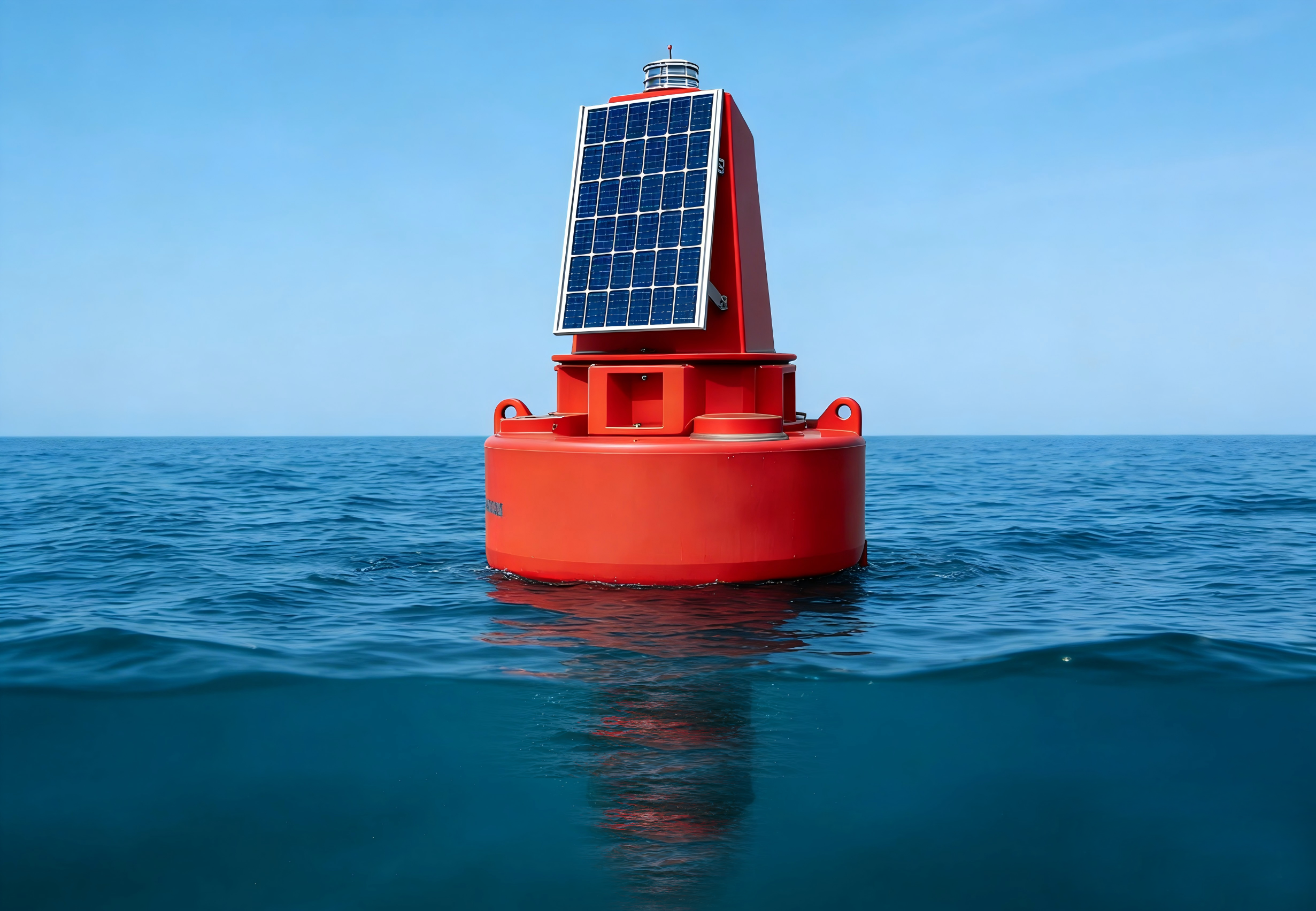
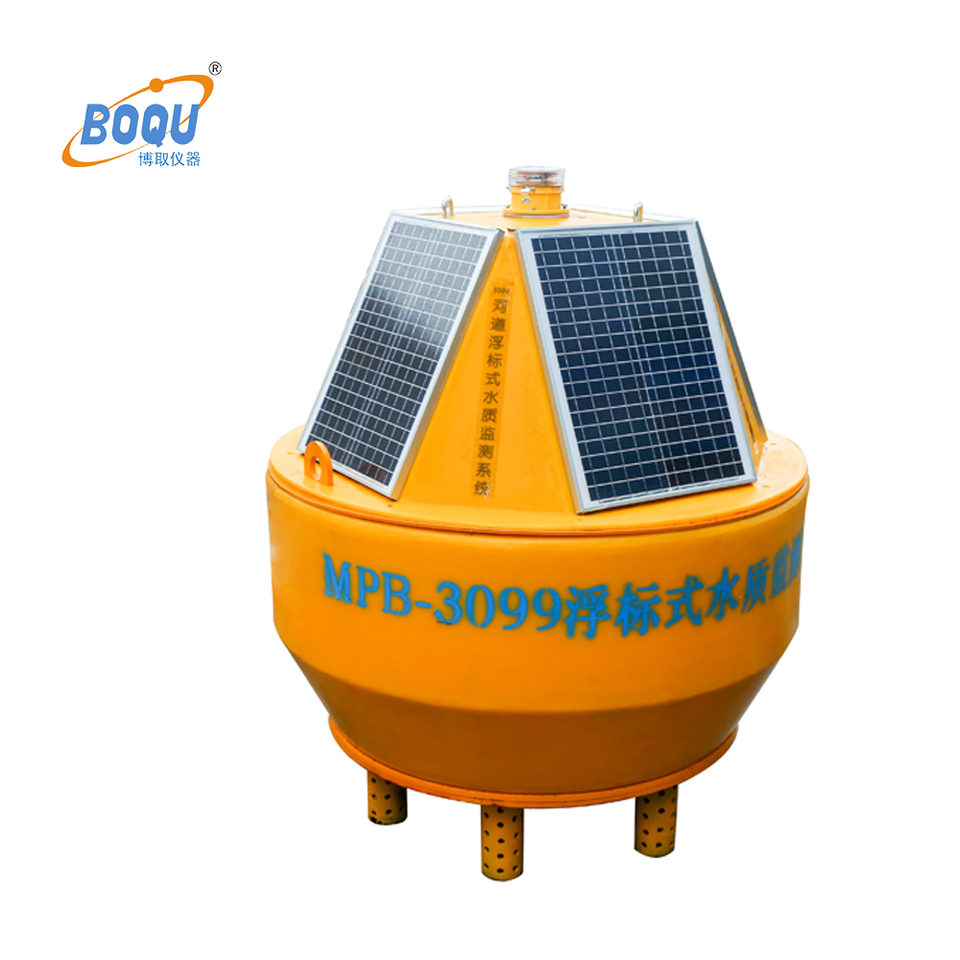
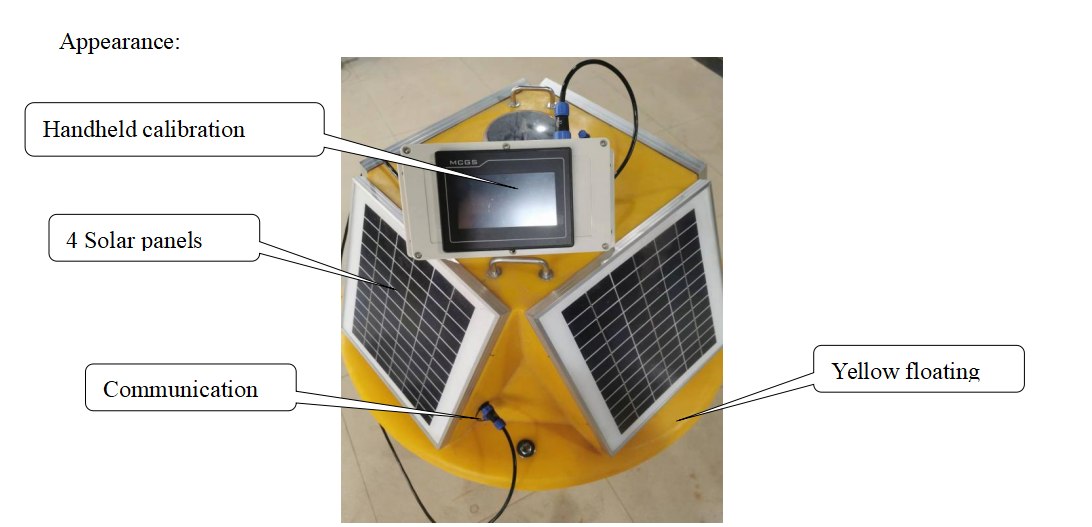
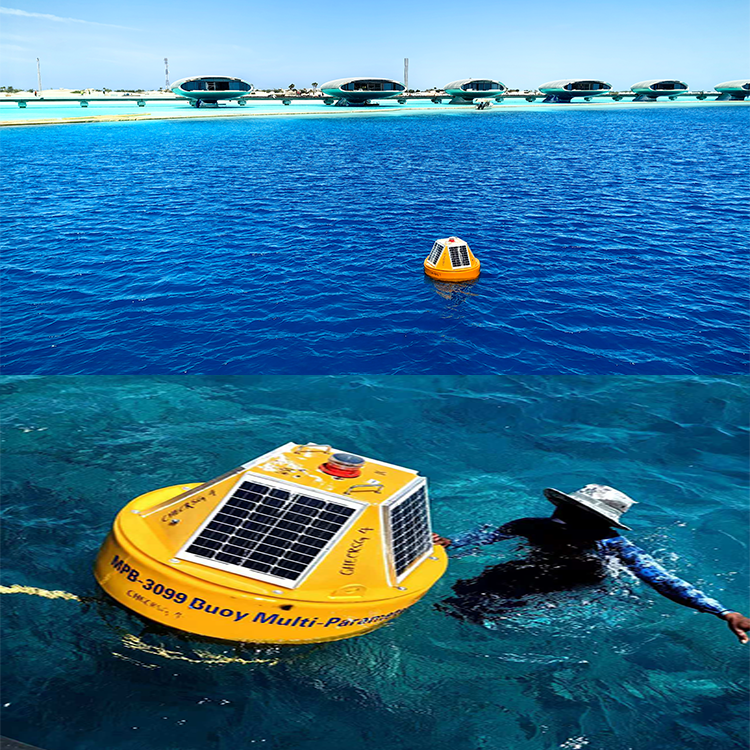
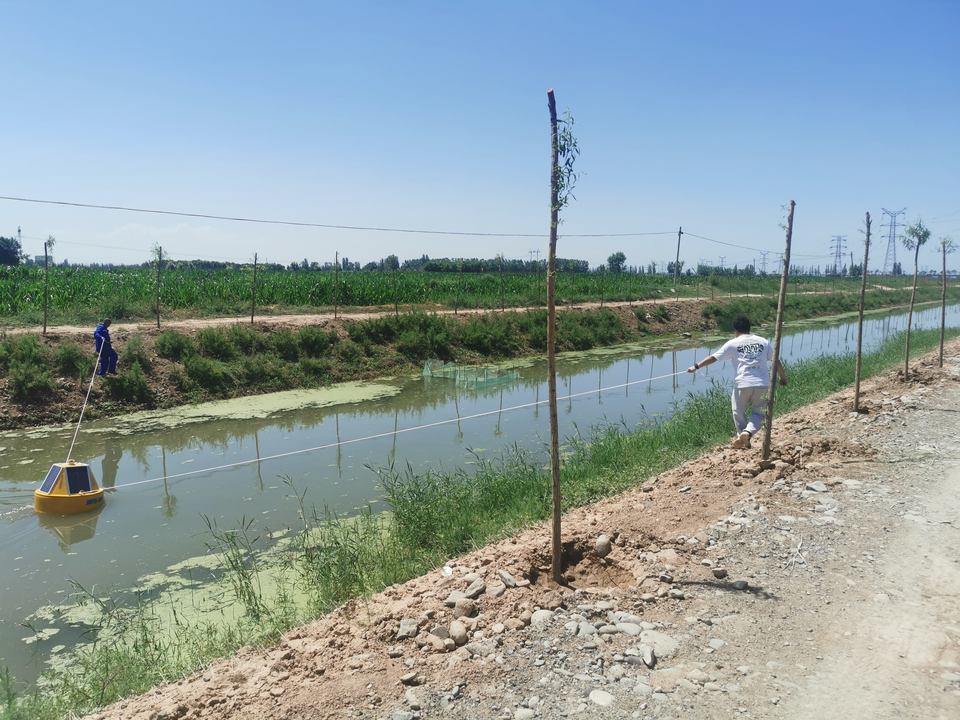

The buoy-based water quality monitoring station adopts an enhanced integrated conical structure, improving equipment stability and durability while better conforming to buoy hydrodynamic engineering principles. It enables real-time measurement of hydrological, water quality, and meteorological parameters within lakes or watersheds. The system integrates data acquisition and transmission functions, and features SMS alerting upon parameter exceedance, as well as automatic light-sensing capability. It offers multiple measurement parameters, high measurement accuracy, large data storage capacity, easy networking, and stable operation.
The buoy employs an unattended intelligent control system to collect and transmit data from multiple sensors. A solar power system composed of solar panels and high-capacity batteries ensures long-term power supply for field operation. The buoy hull is made of ultra-high-molecular-weight polyethylene (UHMWPE), which provides excellent corrosion resistance, anti-biofouling properties, non-fading color, strong impact resistance, lightning resistance, and non-magnetic characteristics—making it ideal for complex hydrodynamic and hydraulic conditions such as those found in reservoirs.
The system is equipped with a powerful host computer software that enables remote real-time observation of hydrological and meteorological conditions (e.g., water levels and rainfall). The software includes a database, reporting tools, data download functionality, and more. Users can also utilize this comprehensive meteorological software to perform further processing and analysis on the recorded data.
The water quality monitoring system consists of six main components: water quality sensors, data logger, communication system, power supply system, integrated mounting frame, and water quality monitoring platform. It can simultaneously monitor multiple water quality parameters, including water temperature, pH, dissolved oxygen (DO), salinity, ammonia nitrogen, turbidity, and chemical oxygen demand (COD).
The data logger features functions such as data acquisition, real-time clock (RTC), scheduled data storage, parameter configuration, and standard 2G/4G (GPRS) communication capabilities.

